Six Transitions That Help When I Get Stuck
"In spite of my best efforts at planning, in spite of meds, in spite of workouts or sunny walks with the dog or naps…I reach a point just about every afternoon where I suddenly run out."


It’s basically duct tape for when your brain blows a gasket.
I have a problem. You might be able to relate to it.
In spite of my best efforts at planning, in spite of meds, in spite of workouts or sunny walks with the dog or naps…I reach a point just about every afternoon where I suddenly run out. I lose the motivation or ability to keep going on any of my projects, whether I like them or not.
Sometimes I can grit my way through that lull — especially when my day job requires it (thank you, Judeo-Christian conditioning). But it’s never pleasant, and it’s usually accompanied by what I call my “drill instructor” inner voice: Oh, you don’t ‘feel’ like doing it, huh? You think I give a [redacted]?!? You aren’t here to feel things, Miller, you are here to get off your lazy [even more redacted] ass and get things done!
Effective, yes. The most healthy coping mechanism? No, and I have the therapy bills to prove it.
At one point I made a six-sided die that would suggest a variety of “break” activities that either were productive (journaling, meditating) or at least fun (reading comics, playing guitar). I wrote about it here:
 Gray Miller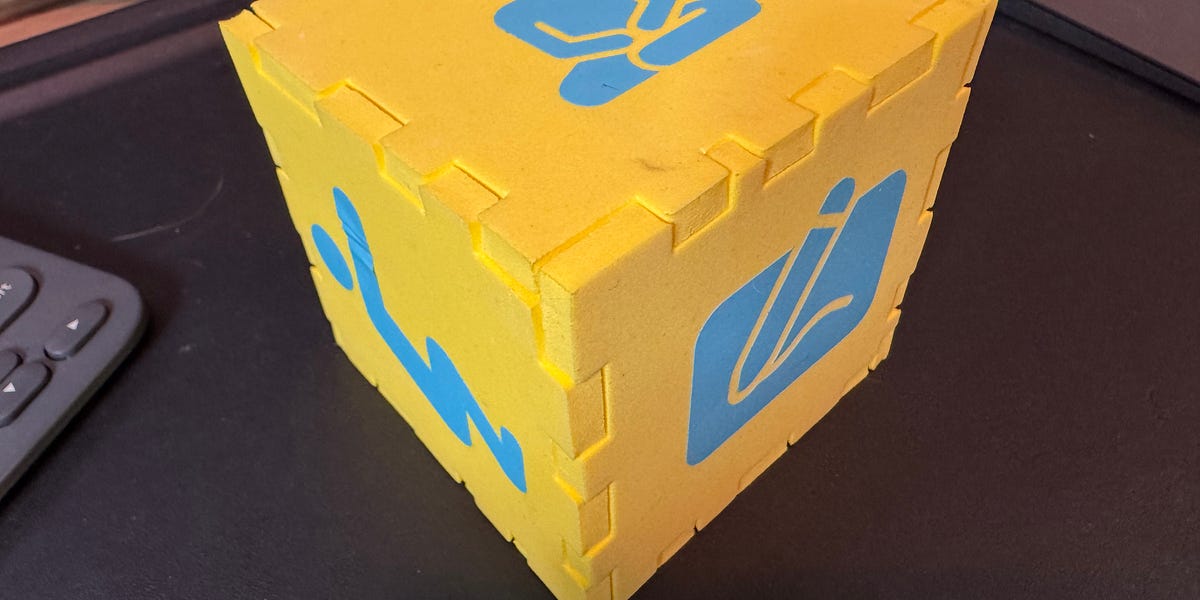
However, I found myself rarely using it once I made it. Even though the decision didn’t need to be made, I still have enough of that oppositional defiant stuff in me to say “F-you, break-dice, you’re not the boss of me!” and end up with a cigar on the back porch.
More than a few smart people I know have suggested rather than fill the gap, I question it.
There’s a body of work within the mental health community suggesting that when we find ourselves in moments like that, it’s not so much that we don’t want to do the Next Thing as that there needs to be more of a transition to it. The problem with break dice is that it didn’t take me out of the To-Do list, it just added something else to it.
I have been wondering if it might be better to generalize the transition, rather than dictate it. Coming up with areas of things that I want to do for a brief time that would serve as an on-ramp to the next thing that I needed to do.
Six choices for a transitional activity, as follows:
Putter: This is when I don’t so much change anything as simply rearrange it in a more pleasing form.
- sorting through stickers
- arranging my markers
- rearranging my desk top
- fiddling with the layout of my bookbinding tools
- tinkering with the not-quite-working 3d printer in the garage.
All things that I walk by daily, think “I should do something about that, it’s not quite right” but never get around to doing.
Make: It’s my lived experience that making something will, more than anything else, regulate my brain. This isn’t a big make — transition, remember? So something like
- One page of writing.
- One gesture drawing session.
- One more ADHD limerick.
- One sketch of a bigger project in my notebook.
- One quick zine (this article almost ended up as that, in fact).
Wander: there’s one particular requirement for wandering: no fixed destination.
- I’m not going to read a chapter, I’m going to just read.
- I’m not going to meditate, I’m going to daydream.
- I’m going to sit on the porch and listen to the leaves in the big tree talk.
Basically, I’m going to let my curiosity loose and simply follow wherever it leads for the next 15 minutes.
Oh yeah, I forgot to mention — the way to justify this to your Over-Productive brain is to say “it's just 15 minutes.” Then you’ll get back to it.
Connect: This helps make up for that “oh, I meant to call, but forgot… that plagues the executive-functionally-challenged brain.
- Text somebody a quick hello
- Leave a voice note, boomer.
- Go to one post by a friend and leave one thoughtful comment without reading any others (yes, this one is dangerous, but sometimes it’s fun to beat the addictive algorithm at its own game).
- Send a postcard (note: this likely means you need to pre-stamp and even pre-address postcards, so you’re not tearing your house apart trying to find the stamps. Ask me how I know.)
- Start a letter you’ll probably never mail.
This is not about creating social obligations. It’s just reminding yourself Oh, hey, I’m a human, and there are other humans out there too.
Explore: similar to “wander” in that you don’t have a fixed destination, but different in that you have an intention. Wandering is local; exploration is boldly going where no brain (in your head) has gone before.
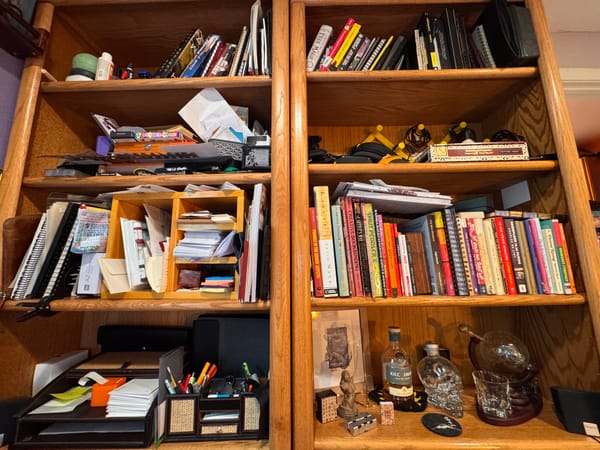
- look through your shelves or your drawers until you find something you forgot you had.
- jump in a weird wikipedic rabbit hole.
- read that online article you bookmarked and never got to.
- find the user manual to some tool or device you own and find out what it really does.
It’s kind of like scrolling your feed, but a home-brew version. For fifteen minutes.
Tend: This one is different than puttering in one particular way: you are going to leave things better than you found them.
- Water your plants.
- Pressure-wash one square meter of your driveway.
- Vacuum a rug.
- Refill your fountain pens.
- Make sure your meds are stocked.
- Lay out your clothes or books or papers for tomorrow.
Not that I’m trying to “clean”, mind you. This is that kind of mini-straightening that helps me sleep at night because one particular thing is no longer chaos. It’s doing future-me a favor by making the future just a bit easier.
This is an interrupt for when the external obligations become a wall.
Yes, this is basically a “dopamenu” — with a bit more emphasis on the “ME”. Dopamenus are great — but usually they’re created in a different frame of mind than the I don’t wanna feeling that accompanies the end of the day. There’s also the added benefit of randomness thrown in (for that novelty kick).
It’s worked for a couple of days since I came up with it — and I had thought that it hadn’t worked today, when that same afternoon slump happened.
But when I think about it — my “slump” ended up being a wander through the world of oracle deck design and vintage illustrations (unfortunately, a lot of AI generated deck illustrations too, but that’s the Etsy we live in now).
Even so, it doesn’t have to work all the time. Just often enough to make things a little easier. I’m planning on creating a little “Transition Slump Oracle” deck of my own — just the six cards — because that seems to be where the muse is leading me.
What do you think? What needs tending, what paths are waiting to be wandered, what personal discoveries might come from fifteen minutes of exploring?