
"Why Would It Be Hard to Want to Want What You Want?"

Ads, Masking, and Socialization, Oh My!
I have great friends. I also have great readers. Sometimes they're even the same people! And one of them, the talented artist A.J. Watters, has been amazingly supportive with feedback as I write.
After my most recent article, they mentioned to me during art group that they liked it...but it seemed a little strange. "Why would someone have difficulty knowing what they want?" they asked.
 Gray Miller
The article posing the question: do I really want what I want?
"Have you ever gone on a date, or somewhere with the family or friends, that you really didn't want to go to? Or that you thought you wanted to go to but when you got there you just thought 'why did I ever think this was a good idea'?"
They looked thoughtful for just a moment, and then nodded. "Ah. I see..."
My answer was a little flippant, but when you have a long shared history with a friend you can sometimes get away with that. Plus, I know they read my articles, so here's the more serious version of why this is a real problem for almost everyone in contemporary times – but like a lot of brain-related issues, it's much worse for the neurospicy.
The simple causes: advertising and stereotypes
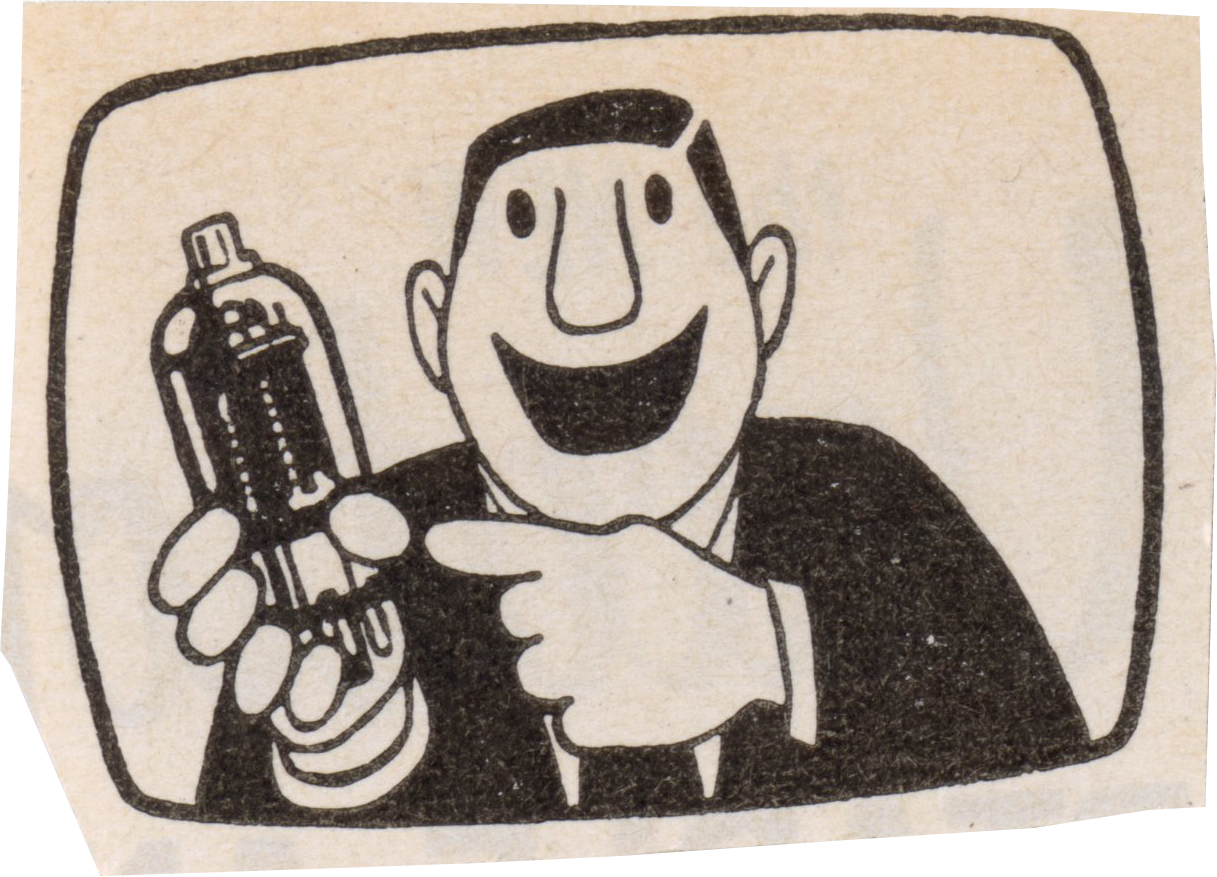
Most of our current economy* is supported by a simple process: making us want things we don't actually need, or even actually want.
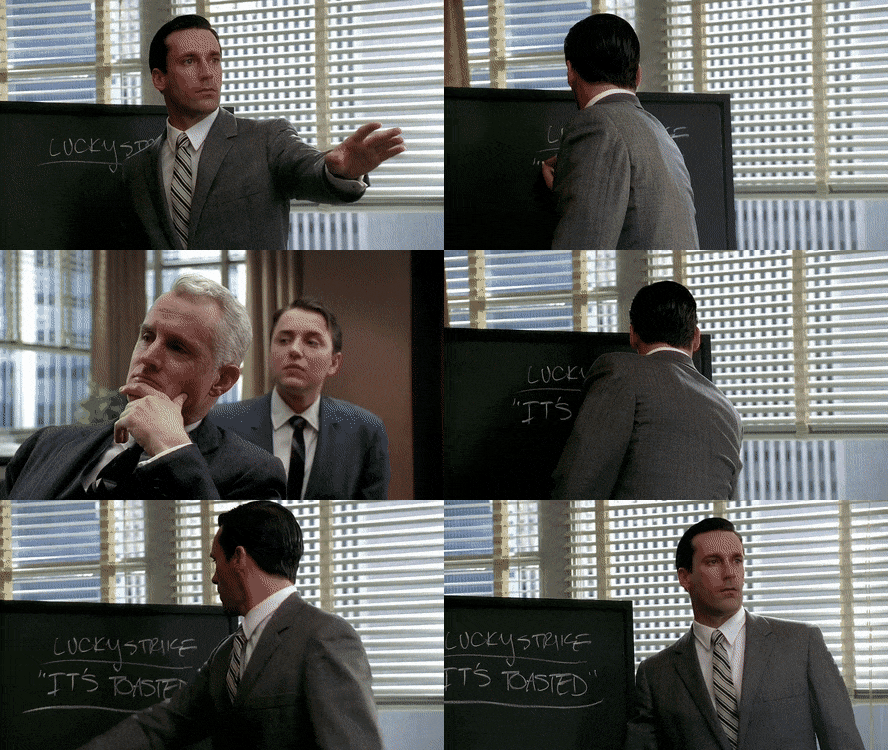
There's been a lot written about the psychology of advertising, and while I know a bit more than the average consumer I'm by no means an expert. So I'll impudently generalize the core idea that's useful for my argument: you don't get sold things. You get sold feelings and identities.
I don't need a new computer. Sure, it chokes a little on some of the current apps for things like video editing – but the truth is, I don't do a lot of video editing.
But Apple would like to sell me a new computer, so they make ads that make video editing look sexy, smart, fast, and easy thanks to the new Q7 chip that uses quantum entanglement to boost rendering speeds by 710%.
Of course, everything after the words "thanks to the" in that paragraph is made up – but that's because by the time I researched the actual current top-of-the-line and wrote it down, they would have leaked rumors about a new one. Their business model relies on people like me – lifelong Mac users – believing that whatever we love about our current computer/phone/tablet is not enough, but if I had a few more gigahertz, megapixels, nits, whatever, we'd really be happy.
And that's why long after the shine has worn off the pretty new phone in my pocket, my bank account still suffers from the monthly commitment to pay it off. Because if they make marketing that's good enough to persuade the 92% of people without ADHD ** to click the "buy" button, then a diminished-executive-function prone-to-impulse dopamine-seeking brain like mine is going to be even more susceptible.
Even while writing this my brain keeps reminding me that I do have an "upgrade" available from my phone carrier, just a phone call away from my doorstep. And there's a fantasy, as I watch YouTubers I admire, that I really do have the skills for this...if only I had the equipment. Surely the path to prosperity lies in a bigger hard drive, faster processor, and more RAM...right?
And that's where the other part of our vulnerability comes in, the part that really has nothing to do with advertising, because our brains do it ourselves.
The Nefarious Levels of Desire
I used to teach a workshop on creating "peak experiences" for yourself. I would start the class by talking about an improv dance performance my former partner and I once did.
It was a very athletic dance, with a prompt of "anger/fighting/love" as the theme, and we thought it wouldn't be too bad – we'd done similar things in other venues and in rehearsal, and frankly we kind of enjoyed the rough housing aspect of it. How many dances include grappling and slapping in their choreographic repertoire?
We did the dance...and afterwards, many people came up to us and told us how much they enjoyed it, that it looked "hot" or "beautiful." "I hope I can do something like that with my partner," was a common theme. "You two have such a beautiful connection."
We were seasoned performers. We did the whole "thanks, so glad you liked it" thing.
But as quickly as we could, we found a corner of the dance hall where we could be somewhat alone. Because that dance had been awful.
Not in expression – people saw what they saw. But both of us could feel, from the moment our hands touched, that something was off about it. We couldn't find the connection that usually let us play off each other, anticipate movement, complement each other's intentions. It had been a miserable five minutes of struggling to find something, the play-anger replaced with real struggle and concern.
We moved off to the corner and found one chair that wasn't being used and she sat on my lap, no talking, and we basically just let the music wash over us, the simple contact and shared experience bring us back to connection. Honestly, that little chair-dance-sway remains one of the most connective dance experiences I've ever had.
But do you think people watching us would have been as entranced or appreciative if we'd just sat in a chair and swayed?
The layers of perception and desire are nefarious:
- The audience members thought they wanted to do what we did with their partners...but that wasn't true.
- What they actually wanted was the feeling they saw us having...except we weren't actually having that feeling.
- They didn't actually want to do that dance. They thought that if they did that kind of dance they would have the feeling they thought we were feeling when they saw us do the dance.
Except we weren't feeling that. Copying our dance style was very unlikely to make them feel that way.
Going off into a corner and sitting quietly and swaying to the music was not necessarily going to do it either. But that's the point: we did it because that's what felt right to us. Not because we saw anyone else doing it, or because we wanted to be "those mindful chair dancers." We were pumped full of cortisol and adrenaline and fear and sweat and somehow we were able to figure it out.
That's just one of the reasons it's hard to really know what we want.
What if my partner and I had been told, our whole lives, that people who sat in chairs and swayed were silly? Were not "real" dancers? Were threatening the very fabric of dance culture and needed to be avoided at all costs?
Or to make a not-so-subtle analogy: what if our identities as dance partners – our careers and social capital – was based entirely around our "angry dance" style? Would we have even considered sitting quietly on the side? Or would we have just gritted our teeth through it, taking what joy we could through the extrinsic affirmations of our audience?
The reason it's hard to want to want what you want is because most of us are conditioned to think of that as frivolous at best or selfish at worst. We're social creatures; if our surroundings are filled with people doing something we don't enjoy, we will likely do it anyway because we just want connection.
It takes slowing down. It takes thinking about things. It takes reflection on how you feel after you do things, whether it's what you've always done or what you just tried. And it changes as you do.
But as far as we know, this is the only life you get – so better make the best of it. There's a saying I like about that which I can't seem to find a citation for, but which I've found very usefu
Anything worth doing is worth doing twice,
on the off chance you did it wrong the first time.
*a completely unresearched and presumptive data point.
** a somewhat researched and documented statistic
\*** I tactfully did not mention that the particular degree was being offered through the dance department, so technically I was Dance major.